Green Infrastructure
Discover how green infrastructure makes it possible to design stormwater infrastructure that is more resilient to climate change.
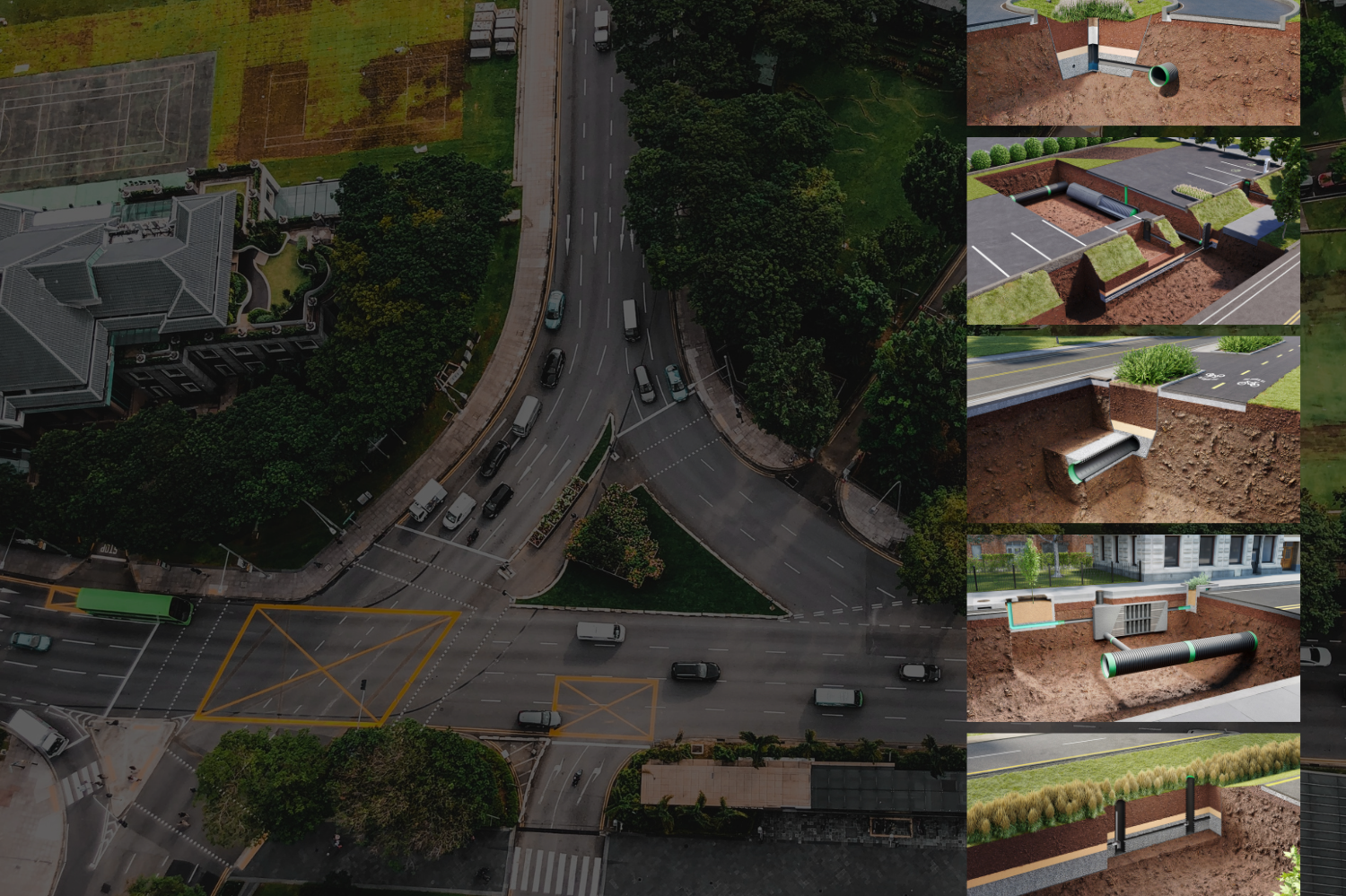
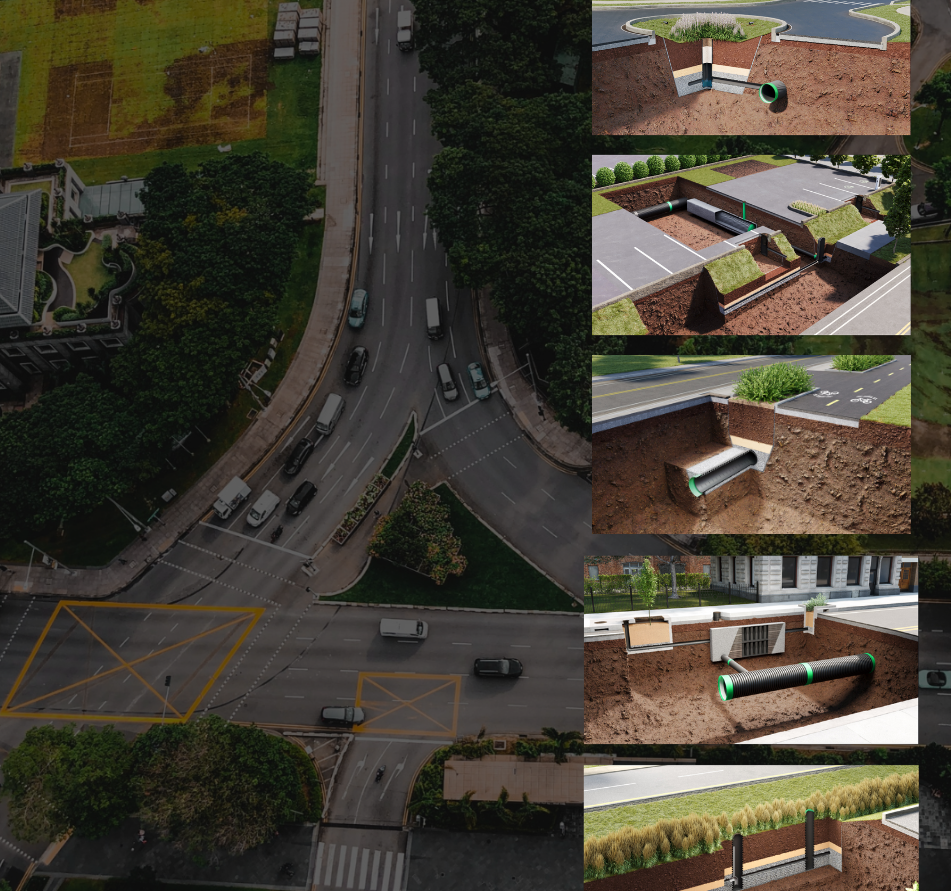
Our design example for green infrastructure.
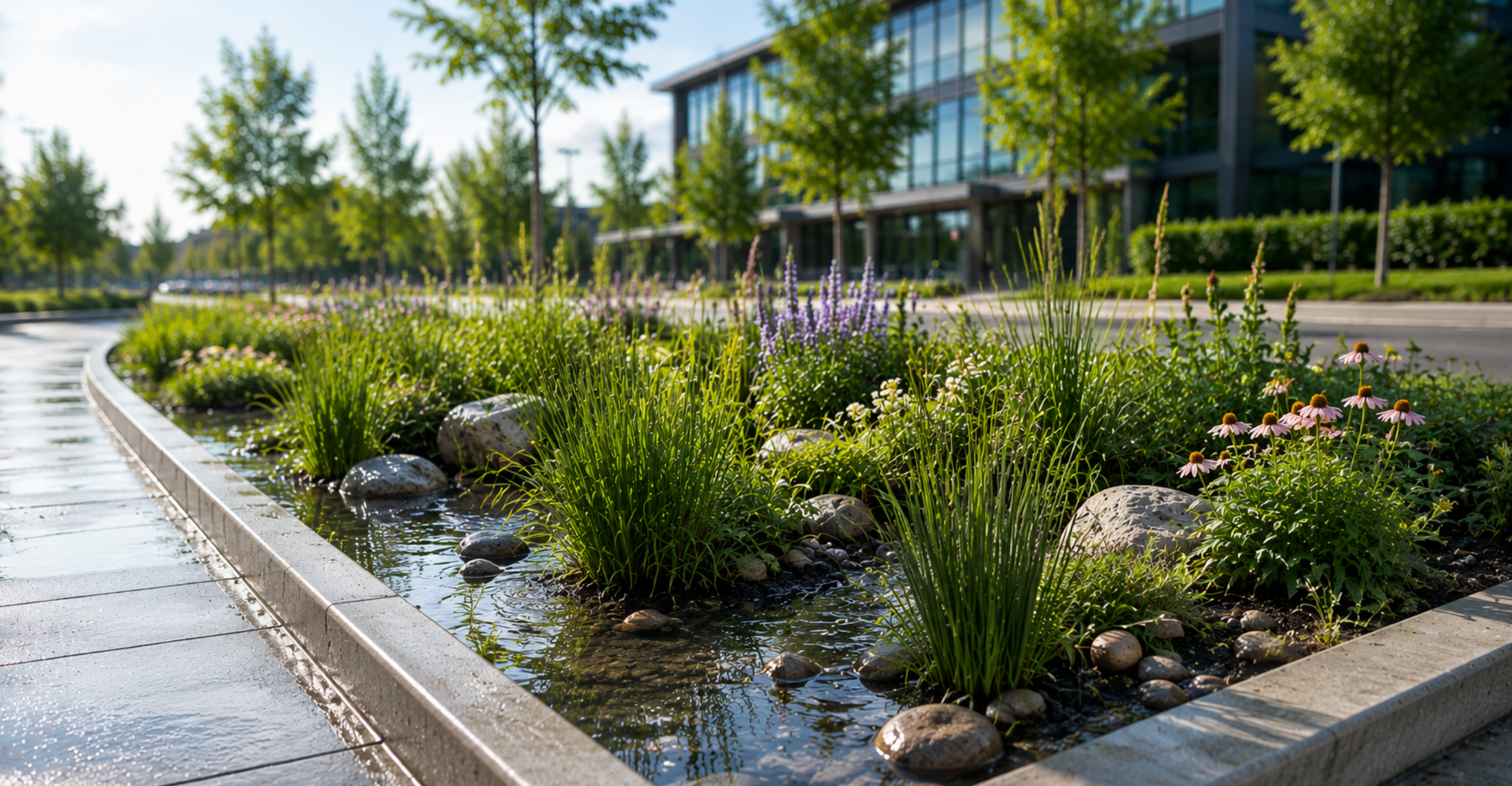
Climate change, urbanization and the expansion of impervious surfaces are placing increasing pressure on existing stormwater infrastructure. To address these growing challenges, municipalities and engineers are adopting Green Infrastructure practices that capture, filter, detain and control stormwater closer to where it falls.
By combining bioretention, biofiltration and underground stormwater management systems, Green Infrastructure helps reduce peak flows, improve stormwater quality, promote groundwater recharge and strengthen community resilience to climate change.
As a leader in sustainable stormwater management solutions, Soleno promotes an integrated approach that combines Green Infrastructure with conventional stormwater systems. Explore five real-world applications that demonstrate how these complementary solutions can be integrated into a variety of urban environments to design more resilient stormwater infrastructure.
Would you like to deepen your knowledge of green infrastructure design principles?
Discover our comprehensive technical guide based on a webinar presented by Soleno’s experts.
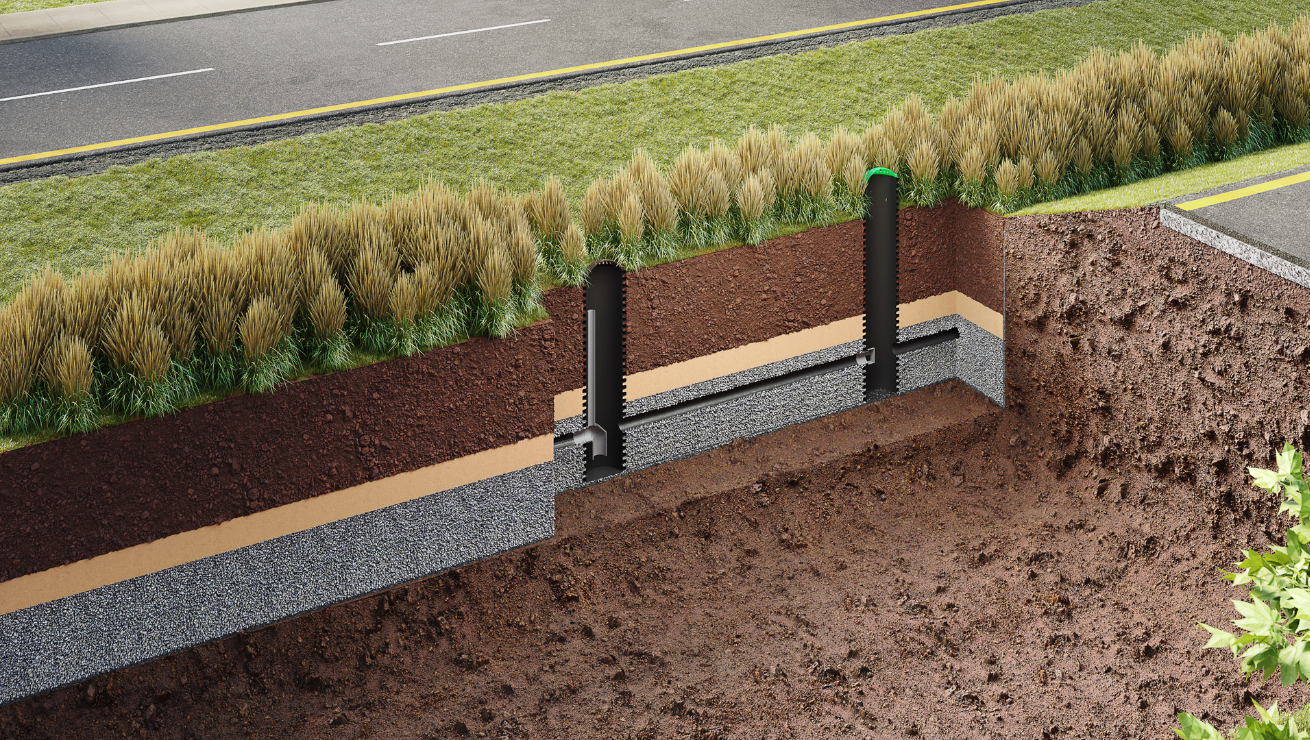
Combining the properties of vegetation and our HDPE solutions, this example of development acts directly at the source to prevent the spread of pollutants throughout the storm sewer system in addition to regulating water flow. It also includes a reinforcement under the grassy area to accommodate additional parking spaces temporarily.
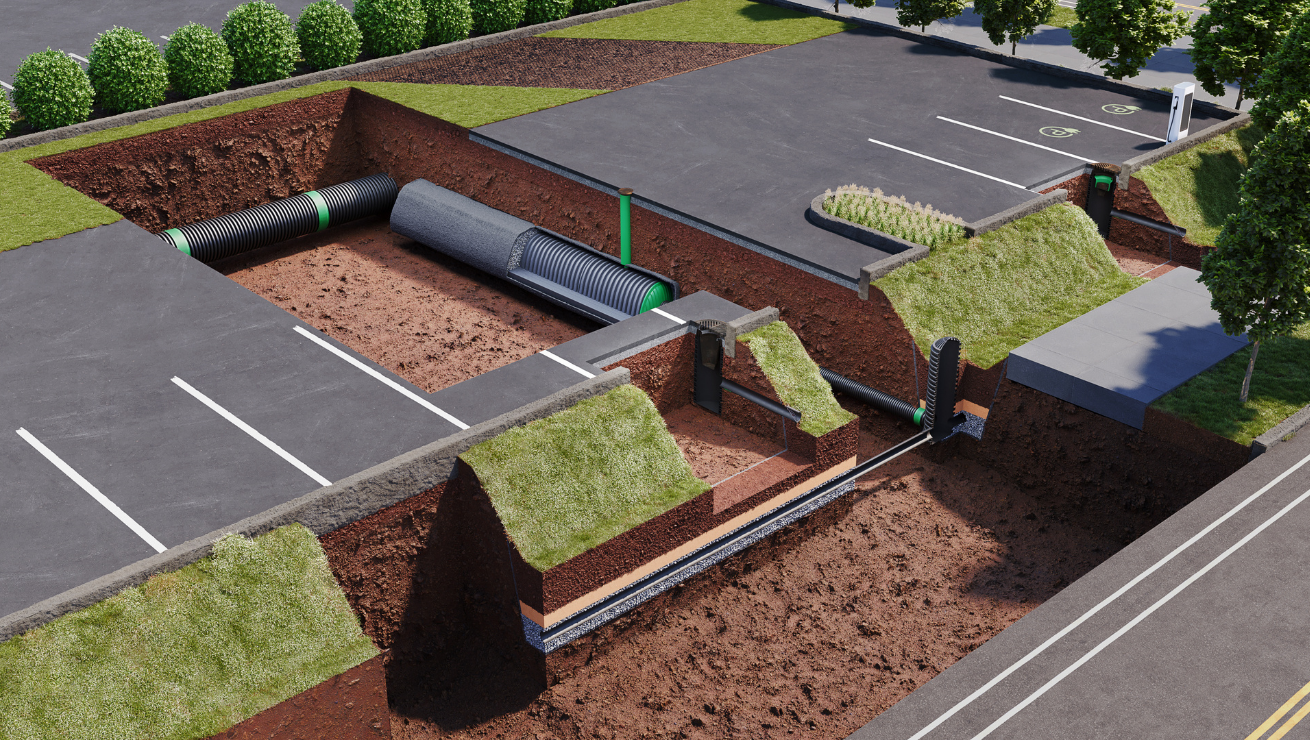
With permeable cladding, storm water treatment at the source, and a retention chamber, it is the most modern example of development for commercial parking lots.
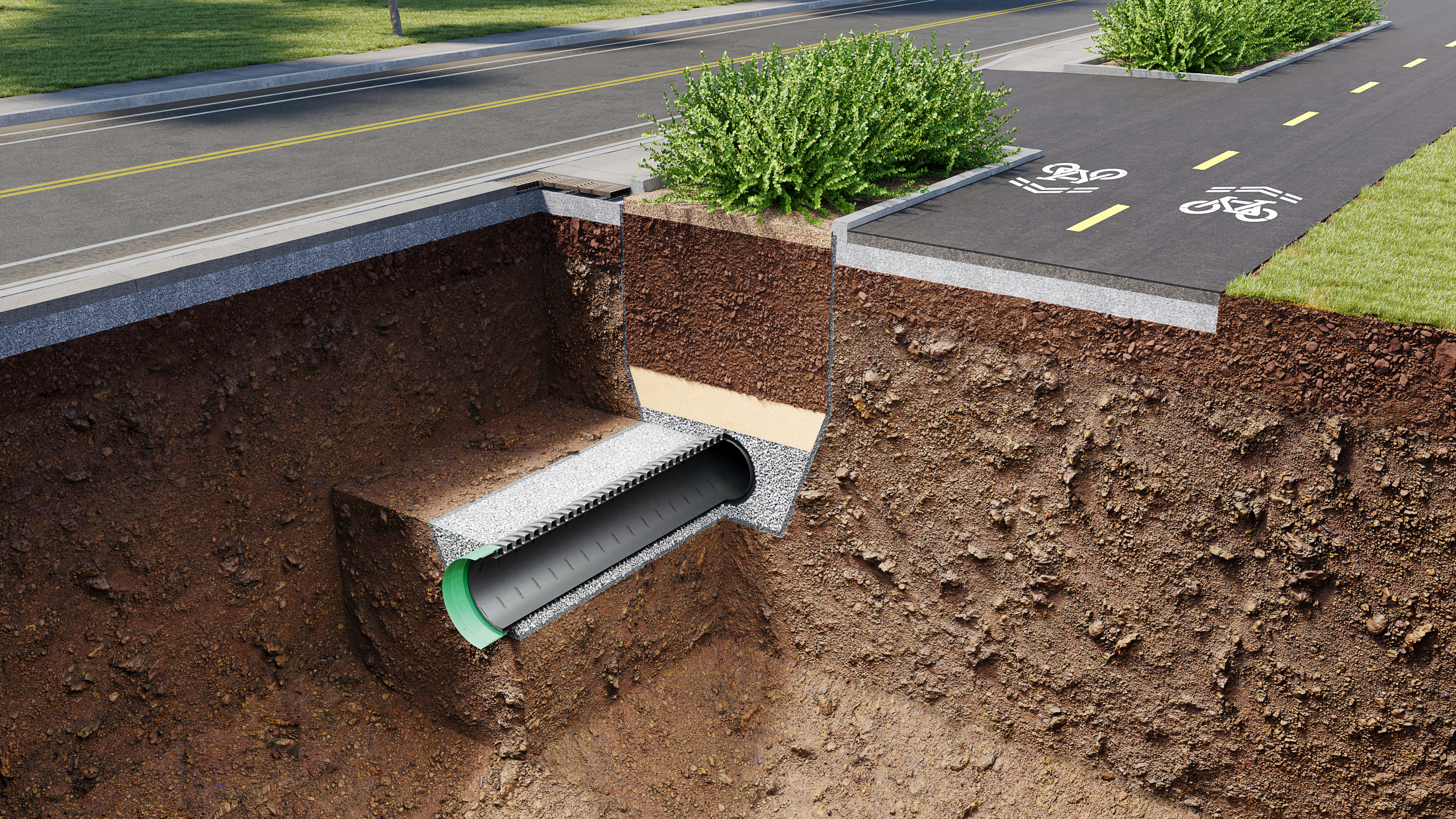
Combining retention and vegetation filtration properties with our under-pavement products, this example of development is suitable for all urban development projects of multifunctional paths combining active transport and pedestrian.
Our example of a layout including rigid driving and a capture box is ideal for a multifunctional path. Its cast-iron entrance for the passage of water allows flow and facilitates maintenance.
The capture of storm water and enhanced control of the water table allow the sustainable development of a sidewalk and a multifunctional path.
Combining the properties of vegetation and our biofiltration system, this example development represents a high-performance solution for the treatment of suspended solids and the efficient abstraction of water to the stormwater system contributing to the quality control of runoff in urban areas.
Our example of a layout including sumps, flow control, and perforated rigid pipe is ideal for a vegetated median boulevard.
Characterized by its simple and fast installation, this concept offers the best structural resistance in addition to avoiding the risk of clogging. Its easy installation and maintenance make it an economical and sustainable solution for boulevard or commercial road applications.
Combining the properties of vegetation and our biofiltration system, this example of development represents a high-performance solution for the treatment of suspended solids and the efficient abstraction of water to the storm water system contributing to the quality control of runoff in urban areas.
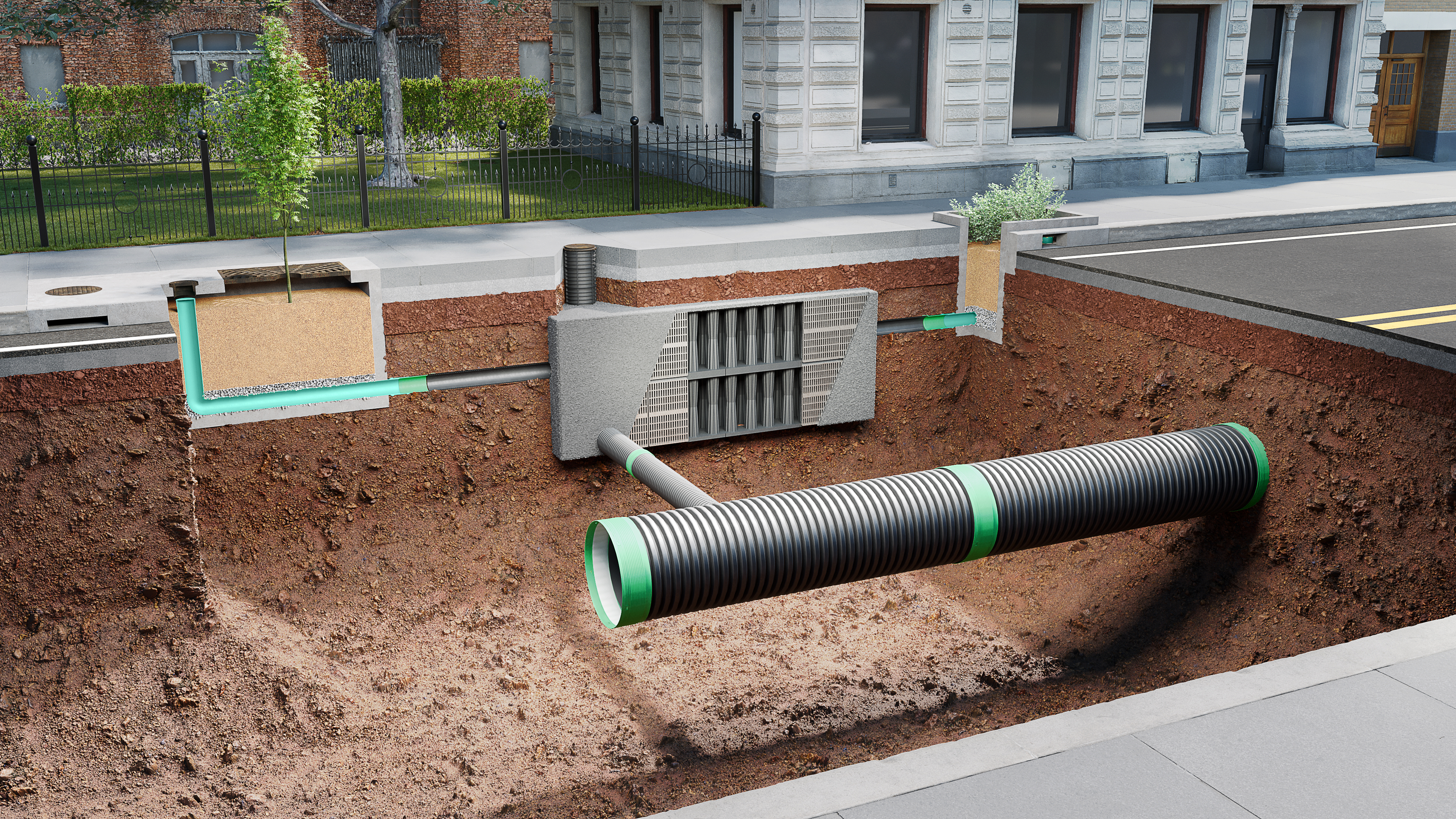
Our example of a layout that includes biofiltration, cell basin, capture box, and smooth interior pipe is ideal for a commercial street.
Allowing retention, reuse, and infiltration, our concept is the most effective for the sound management of surface water. Its small footprint, ease of maintenance, and resistance are properties that perfectly match it with commercial areas with traffic.
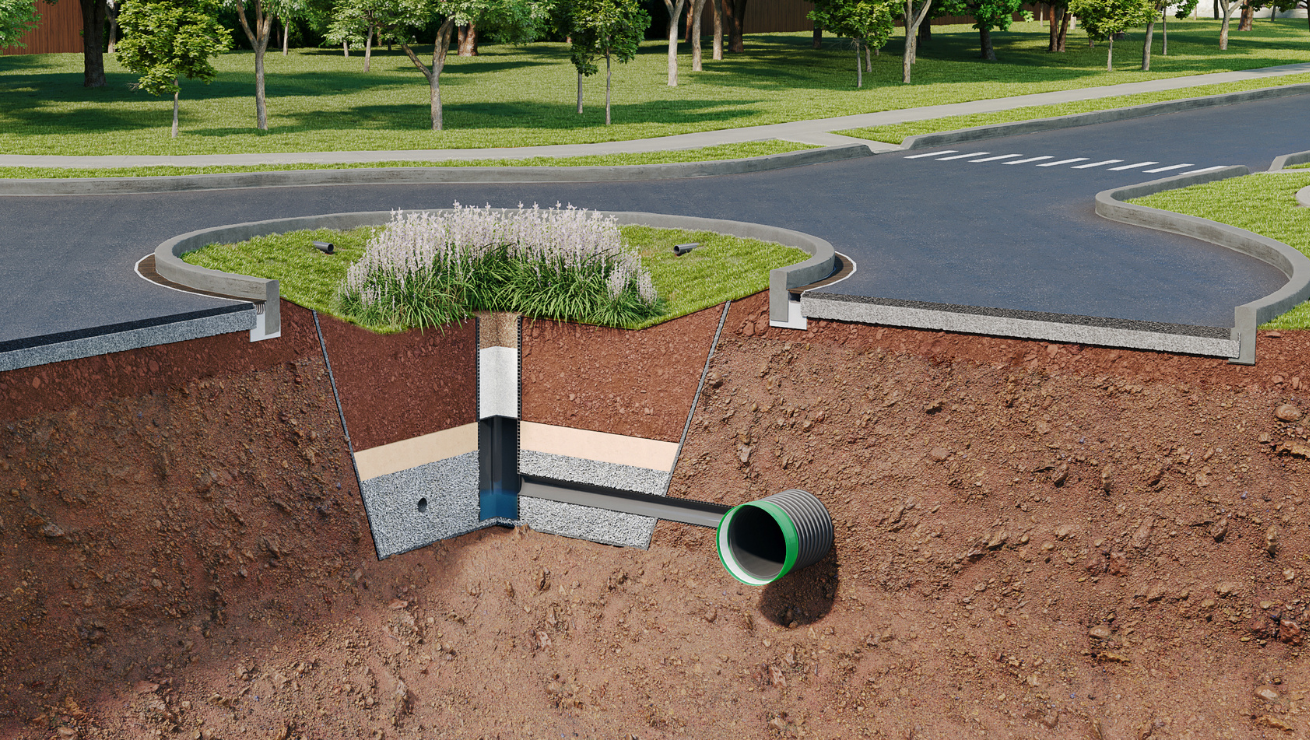
Using vegetation retention and filtration properties, this example of development represents a high-performance solution for suspended solids treatment, retention, reuse, and infiltration for sound surface water management.
Our example of development including a biofiltration system, linear gutters, and perforated drain is ideal for urban development with converging lanes.
Efficient water abstraction and drainage to the storm water system contribute to the quality control of runoff in urban areas. In addition, the system promotes plant feeding and infiltration into the water table.
Characterized by a small footprint, lightness, and performance, it is the most popular concept for areas with converging tracks.
Green infrastructure is one of the solutions to current climate issues and improves stormwater management. Our 5 development examples offer significant economic, social, and environmental benefits.
Green infrastructure plays an essential role in adapting stormwater networks to climate change. By capturing, filtering, retaining, and infiltrating stormwater close to where it falls, it reduces runoff volumes and peak flows that place increasing pressure on existing networks.
Combined with high-performance retention systems, it helps create an integrated stormwater management approach that more closely replicates the natural hydrological cycle.
Face with the evolution of climate change, the design of urban landscape planning is at the heart of cities’ concerns.
Climatic hazards such as temperature increases, increasing rainfall intensity, and increased occurrences of winter mild weather, municipalities must adapt and redevelop their rainwater network.
Innovative strategies protecting water sources will be deployed to create a quality living environment and green infrastructure will be increasingly privileged.
Green infrastructure systems reduce peak flows by managing stormwater directly at its source, before it reaches the sewer network. Through features such as bioretention cells, vegetated swales, planted medians, and permeable pavements, they capture, filter, retain, and infiltrate a portion of stormwater runoff.
By slowing the flow of water and promoting its infiltration or temporary storage, they reduce the volume of water conveyed simultaneously to existing infrastructure. This approach helps reduce the risk of sewer system overload, limits flooding, and more closely replicates the natural hydrologic cycle.
To maximize their effectiveness, green infrastructure systems are often combined with underground detention facilities and flow control systems, creating an integrated stormwater management strategy.
Integrating green infrastructure into a dense urban environment relies on an approach that combines vegetated surface features with underground stormwater management infrastructure. When space is limited, solutions such as vegetated medians, bioretention cells, vegetated swales, or tree plantings can be combined with underground geocellular retention systems or pipe-based detention systems installed beneath streets, parking lots, or public spaces.
This approach makes it possible to preserve urban functions while increasing stormwater management capacity. Green infrastructure helps reduce peak flows, improve water quality, promote infiltration, and enhance the climate resilience of neighborhoods, without requiring large areas dedicated solely to stormwater management.
Green infrastructure systems help optimize existing stormwater infrastructure by reducing the volume of water that reaches drainage networks during rainfall events. By capturing, filtering, retaining, and infiltrating part of the runoff at its source, they reduce the pressure placed on pipes, retention ponds, and existing flow control structures.
When combined with underground storage solutions and flow regulation devices, they maximize the capacity of existing infrastructure, reduce overflows, and, in some cases, delay or reduce the investments needed to expand drainage networks. This integrated approach is now considered one of the most effective strategies for adapting stormwater infrastructure to climate change while optimizing development costs.
As the 1st developer of sustainable solutions for the control of rainwater and in line with this trend that respects the principles of sustainable development, Soleno now offers 5 development examples.
Our examples of development are turnkey product packages that allocate sustainable management of territories and resources including bioretention and biofiltration systems. Our solutions protect water sources, protect natural environments and adapt to current challenges.
The implementation of green infrastructure allows sustainable management of the territory and resources. In addition, it promotes the development of sustainable development to adapt to the effects of climate change that municipalities are facing.
Our development examples allow the protection of natural environments and water resources. They include greening of traffic routes, public spaces, recreational corridors, and green stormwater management systems to meet urban needs.
Soleno now offers development examples of green infrastructure. They are turnkey product packages including bioretention and biofiltration systems that can be used in infrastructure to ensure sustainable management.
Obviously, each of our development examples can be adapted to your situation. Contact our team to learn more.