In This Technical Guide
- Why Has Green Infrastructure Become Essential?
- How Does Green Stormwater Infrastructure (GSI)Improve Stormwater Management?
- How Does Green Infrastructure Work?
- Key Design Considerations
- Designing Green Infrastructure for Cold Climates
- Green Infrastructure in Action: Five Real-World Applications
- Solutions for Building High-Performance Green Infrastructure
- Frequently Asked Questions
1. Why Does Stormwater Infrastructure Need to Evolve?
Traditional stormwater infrastructure was designed for a time when rainfall patterns were more predictable, cities were less densely developed and drainage systems had sufficient capacity to quickly convey runoff away from urban areas. Today, those conditions have changed significantly.
Climate change is increasing the frequency and intensity of heavy rainfall events, while continued urban development is replacing natural landscapes with impervious surfaces such as roads, parking lots and buildings. As a result, less water infiltrates into the ground and more runoff is directed into storm sewer systems.
At the same time, much of North America’s stormwater infrastructure is reaching or exceeding its intended service life. Aging systems must now accommodate greater runoff volumes than they were originally designed for, increasing the risk of overloaded storm sewers, localized flooding, combined sewer overflows and damage to receiving water bodies.
To address these challenges, the way stormwater infrastructure is designed is evolving. Rather than simply collecting and conveying runoff as quickly as possible, today’s best practices focus on managing stormwater closer to where it falls while restoring natural hydrologic processes.
This approach combines solutions that capture, treat, detain, infiltrate, control and gradually release stormwater. By reducing peak flows and limiting the volume of runoff entering existing storm sewer systems, Green Infrastructure helps communities become more resilient while protecting critical public infrastructure.
Green Infrastructure does not replace conventional stormwater infrastructure—it complements it. By integrating vegetation, bioretention, biofiltration and underground stormwater management systems with traditional gray infrastructure, engineers can design stormwater systems that are more efficient, sustainable and better prepared for future climate conditions.
Key Takeaway
Stormwater infrastructure can no longer be designed using yesterday’s assumptions. Climate change, urbanization and aging infrastructure require a new approach to stormwater management—one that manages runoff at its source. By combining Green Infrastructure with conventional stormwater systems, municipalities can reduce peak flows, protect existing infrastructure and build more climate-resilient communities.
2. How Does Green Stormwater Infrastructure (GSI) Improve Stormwater Management?
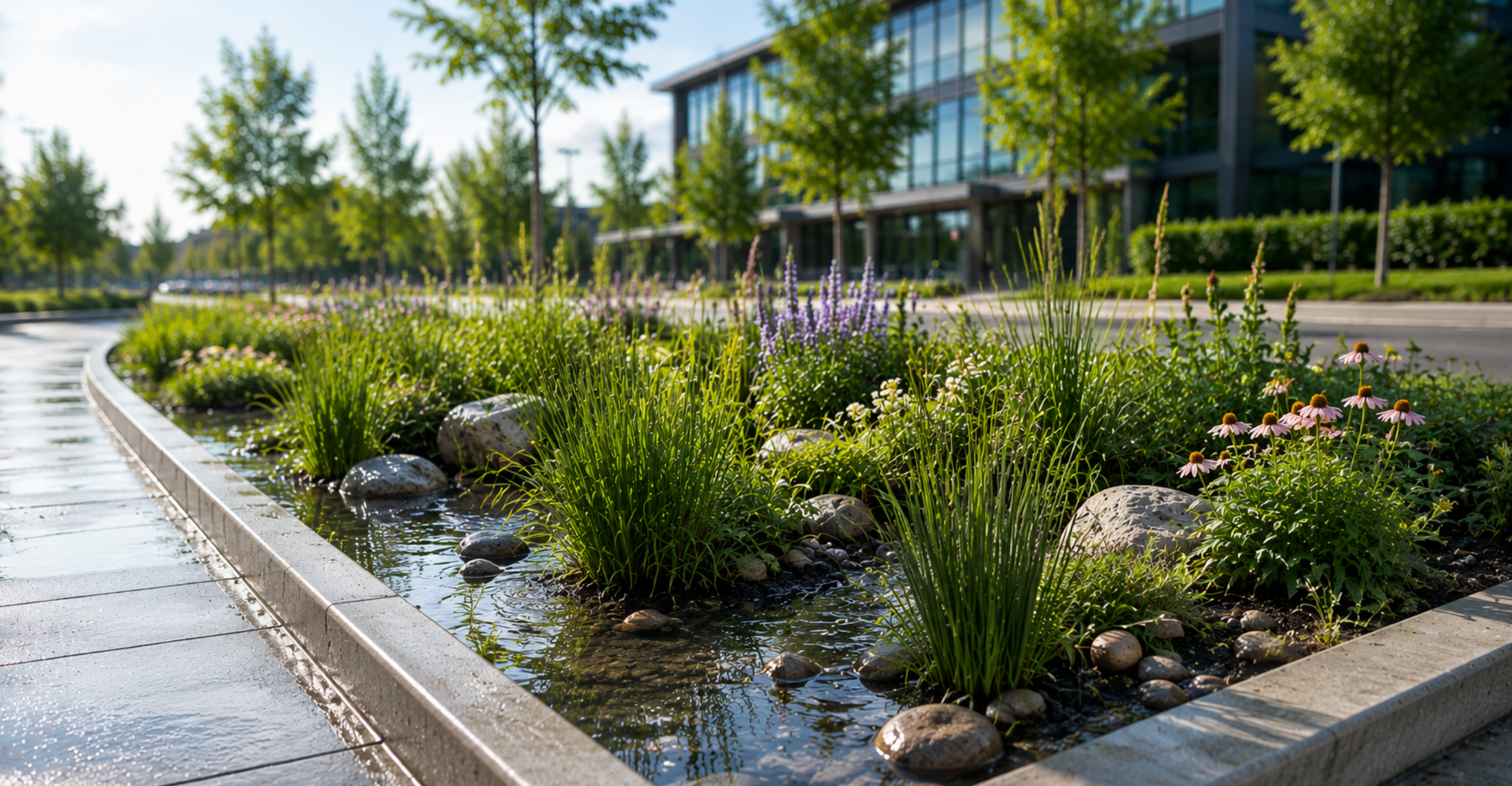
Green Infrastructure is built around one fundamental principle: manage stormwater as close as possible to where it falls while restoring the natural water cycle. Unlike conventional stormwater systems, which are primarily designed to collect and convey runoff away from developed areas as quickly as possible, Green Infrastructure slows, filters, detains and infiltrates stormwater before it reaches the storm sewer system.
Managing stormwater at its source reduces the volume of runoff entering existing infrastructure, lowers peak flows and helps minimize the risk of flooding and system overload during heavy rainfall events. By distributing stormwater management across multiple complementary practices, municipalities can improve the performance of their existing infrastructure while increasing resilience to future climate conditions.
The benefits of Green Infrastructure extend well beyond hydraulic performance. Through bioretention and biofiltration, vegetation and engineered soil media naturally remove suspended solids and many common pollutants from stormwater runoff before it infiltrates into the ground or is discharged to receiving waters.
Where site conditions permit, infiltration also helps replenish groundwater resources and restore a more natural hydrologic cycle. Green Infrastructure provides additional environmental and community benefits by reducing urban heat islands, supporting biodiversity, enhancing public spaces and creating healthier, more attractive communities.
Green Infrastructure is therefore much more than an environmental initiative. It is an engineering strategy that helps optimize existing stormwater infrastructure, reduce the need for costly system expansions and build communities that are better prepared for future climate challenges.
Key Benefits of Green Infrastructure
- Reduce peak flows by capturing, detaining and infiltrating stormwater runoff at its source.
- Improve water quality through bioretention, biofiltration and stormwater pretreatment.
- Promote groundwater recharge where site conditions and soils allow.
- Reduce the risk of flooding and overloaded storm sewer systems during major storm events.
- Optimize existing infrastructure by reducing the volume of runoff entering conventional stormwater systems.
- Create more resilient, sustainable and livable communities through integrated stormwater management.
Key Takeaway
Green Infrastructure restores many of the functions of the natural water cycle. By capturing, filtering, detaining, infiltrating and controlling stormwater runoff, it reduces pressure on existing stormwater infrastructure while creating more resilient and sustainable communities.
3. How Does Green Infrastructure Work?
Green Infrastructure is designed to mimic the natural hydrologic cycle. Instead of conveying stormwater directly into the storm sewer system, it slows the movement of runoff to encourage treatment, temporary storage and, where site conditions allow, infiltration into the underlying soil.
Every component within a Green Infrastructure system performs a specific function. Working together, these elements manage runoff volumes, reduce peak flows and improve water quality before stormwater is gradually released back into the environment or conveyed to the storm sewer system.
1. Stormwater Collection
Runoff from roads, parking lots and other impervious surfaces is first collected through catch basins, trench drains or other collection structures. Depending on project requirements, pretreatment measures may also be incorporated to capture sediment, debris and floating pollutants before stormwater enters the system.
2. Treatment Through Vegetation
Stormwater is then directed into a bioretention area where vegetation plays a critical role. Plants slow runoff, promote evapotranspiration and naturally remove pollutants while improving the overall health of the system.
3. Biofiltration Through Engineered Soil Media
Beneath the vegetation, specially engineered soil media filters stormwater as it moves through the system. This layer removes fine particles, improves water quality and creates an ideal environment for root development and beneficial microbial activity that supports natural treatment processes.
4. Detention and Infiltration
After passing through the filter media, stormwater reaches a drainage layer consisting of clean stone or an underground detention system. This temporary storage reduces peak discharge rates while allowing infiltration into the native soil where site conditions are suitable.
5. Flow Control
Where infiltration capacity is limited or controlled release is required, a flow control device regulates the rate at which stormwater leaves the system. This controlled discharge helps protect downstream infrastructure during heavy rainfall events while meeting project-specific hydraulic requirements.
6. Controlled Discharge
Once stormwater has been treated, detained and controlled, it is gradually discharged to the storm sewer system or a receiving water body in accordance with the project’s design criteria. This process more closely replicates the natural hydrologic cycle while improving the overall performance and resilience of stormwater infrastructure.
Key Takeaway
High-performing Green Infrastructure functions as an integrated system. Every component—from stormwater collection and pretreatment to biofiltration, detention and flow control—works together to sustainably manage runoff while maximizing the long-term performance of the entire stormwater management system.
4. What Are the Key Design Considerations for Green Infrastructure?
The performance of a Green Infrastructure system depends as much on thoughtful design as it does on selecting the right components. Every project presents unique challenges related to site conditions, climate, soil characteristics and stormwater management objectives.
Before designing a bioretention or biofiltration system, engineers should evaluate several key factors to ensure long-term hydraulic performance, simplified maintenance and reliable operation throughout the system’s service life.
Soil Infiltration Capacity
One of the first considerations is the site’s infiltration capacity. This determines whether stormwater can infiltrate directly into the native soil or whether an underground detention system with controlled discharge is required.
Geotechnical investigations and infiltration testing provide valuable information about soil permeability and help determine the most appropriate stormwater management strategy.
Runoff Volume and Peak Flow Management
A successful Green Infrastructure system must be designed to manage runoff generated by the project’s target storm events.
Sizing bioretention areas, underground detention systems and flow control devices appropriately helps reduce peak flows while meeting local design requirements and regulatory criteria.
Vegetation and Engineered Soil Media
Vegetation and engineered soil media play a critical role in stormwater treatment.
Plant species should be selected for the local climate and be capable of tolerating alternating wet and dry conditions. Likewise, engineered media should provide an optimal balance between filtration performance, hydraulic conductivity and healthy plant growth.
Stormwater Pretreatment
Pretreatment protects downstream Green Infrastructure practices by capturing sediment, debris and pollutants before stormwater enters the bioretention system.
Depending on project requirements, pretreatment may include treatment catch basins, filtration systems, hydrodynamic separators or sediment forebays. Effective pretreatment significantly improves long-term performance while reducing maintenance requirements.
Accessibility and Maintenance
Like any municipal asset, Green Infrastructure should be designed with inspection and maintenance in mind.
Access to key components, vegetation replacement, sediment removal and routine inspections should all be considered during the design phase to ensure long-term performance and minimize lifecycle costs.
An Integrated Design Approach
Successful Green Infrastructure projects require collaboration among civil engineers, landscape architects, planners, municipalities and other project stakeholders.
An integrated design process ensures that hydraulic performance, environmental objectives, urban design and long-term operations are considered together, resulting in more efficient and resilient stormwater infrastructure.
Key Takeaway
High-performing Green Infrastructure is not built around a single product or practice. Its success depends on integrating complementary components—including collection, pretreatment, bioretention, biofiltration, detention, flow control and controlled discharge—into one coordinated stormwater management system.
5. Designing Green Infrastructure for Cold Climates
Green Infrastructure has become an established best practice for sustainable stormwater management. However, designing these systems for northern climates requires additional considerations to ensure reliable long-term performance.
Freeze-thaw cycles, snow accumulation, winter maintenance operations and the use of de-icing salts all introduce challenges that should be addressed during the design process.
Contrary to common misconceptions, Green Infrastructure performs exceptionally well in cold climates when designed according to recognized best practices. Numerous projects across Canada and the northeastern United States have demonstrated their ability to reduce peak flows, improve stormwater quality and increase the resilience of municipal infrastructure.
Selecting Climate-Appropriate Vegetation
Plant selection is critical to the long-term success of any Green Infrastructure system.
Species should be able to tolerate extended wet and dry periods, winter conditions and exposure to road salts. A diverse planting palette also improves system resilience while reducing long-term maintenance requirements.
Designing High-Performance Bioretention Media
The engineered soil media used in bioretention systems must provide adequate drainage while supporting healthy vegetation and effective pollutant removal.
Proper media composition is essential to maintaining consistent hydraulic performance throughout seasonal changes.
Planning for Winter Operations
Green Infrastructure should be designed to accommodate routine municipal maintenance practices.
Snow storage, plowing operations, spring street sweeping and seasonal inspections should all be considered to ensure year-round functionality and long-term reliability.
Designing for Extreme Storm Events
Heavy rainfall can occur during spring snowmelt or when soils remain partially frozen.
Green Infrastructure systems should therefore incorporate adequate detention storage, flow control devices and emergency overflow pathways to safely manage excess runoff during extreme weather events.
A Design Approach Tailored to Northern Climates
Designing Green Infrastructure for cold climates is not simply a matter of applying solutions developed for warmer regions.
It requires an integrated approach that combines vegetation, pretreatment, underground stormwater infrastructure, detention, infiltration and flow control to create systems capable of performing reliably despite seasonal weather extremes.
Cold Climate Design Checklist
- Evaluate native soil infiltration rates
- Select salt-tolerant native vegetation
- Specify high-performance engineered soil media
- Incorporate effective pretreatment
- Design for snow storage and maintenance access
- Include detention storage and controlled discharge
- Provide emergency overflow capacity
Key Takeaway
Green Infrastructure is well suited to Canada’s climate when it is designed using proven cold-climate best practices. By accounting for freeze-thaw cycles, winter maintenance operations, road salts and seasonal runoff patterns, engineers can build systems that deliver reliable long-term hydraulic and environmental performance.
6. Green Infrastructure in Action: Five Real-World Applications
Green Infrastructure principles can be applied across a wide range of municipal, commercial and institutional developments. By integrating stormwater collection, pretreatment, bioretention, biofiltration, underground detention and flow control practices, engineers can design systems that meet hydraulic, environmental and urban design objectives simultaneously.
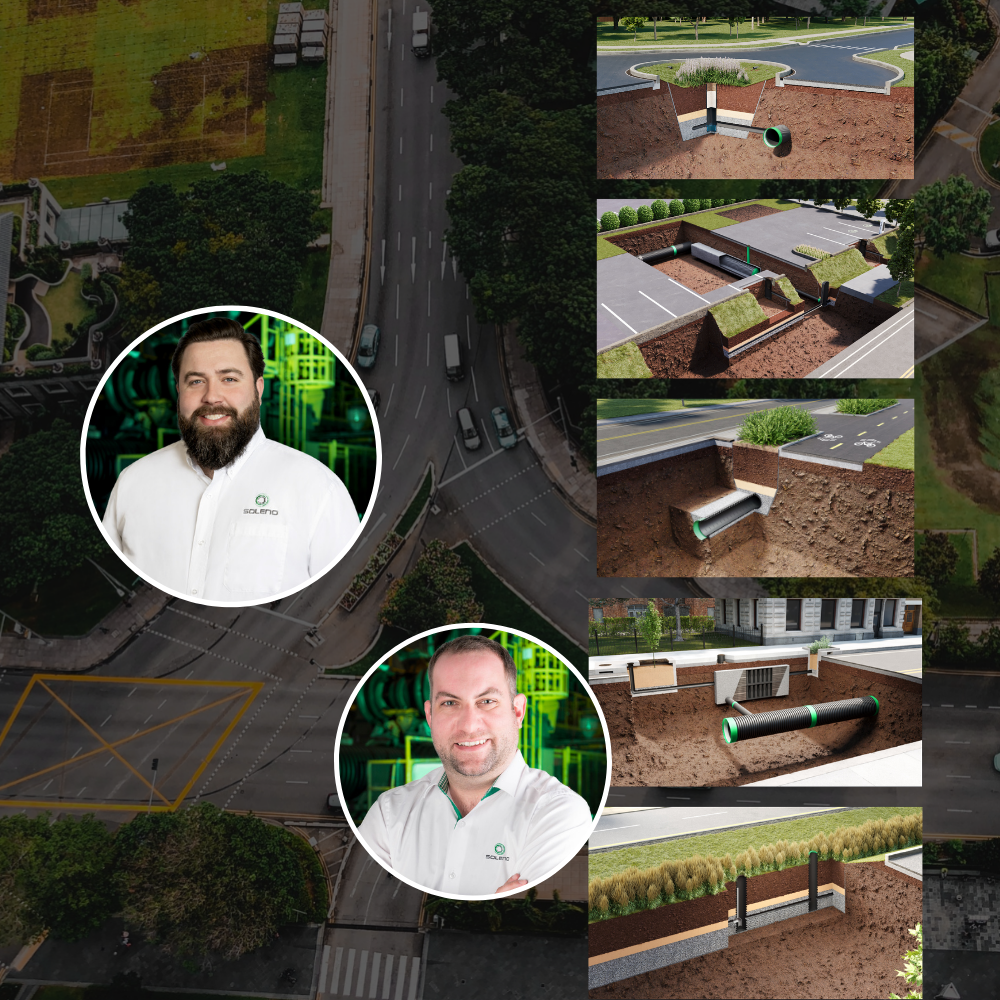
Explore five real-world applications that demonstrate how Green Infrastructure can be integrated into different types of developments to sustainably manage stormwater while improving community resilience.
Commercial Parking Lots
Parking lots typically contain large impervious surfaces that generate significant stormwater runoff. Integrating bioretention areas, pretreatment systems and underground detention solutions helps reduce peak flows, improve stormwater quality and maximize the efficient use of available space.
→ Explore the Commercial Parking Lot Application
Commercial Streets
Commercial streets must balance mobility, public safety, urban greening and effective stormwater management. By combining street trees, bioretention systems, underground infrastructure and conventional storm sewer networks, municipalities can create streetscapes that are both more resilient and more attractive.
→ Explore the Commercial Street Application
Roundabouts
Roundabouts provide an excellent opportunity to integrate Green Infrastructure directly into transportation corridors. Vegetated bioretention areas, trench drains and biofiltration systems capture and treat stormwater runoff while enhancing the surrounding landscape.
→ Explore the Roundabout Application
Vegetated Medians
Vegetated medians manage stormwater at its source while improving the appearance and environmental performance of roadways. Through bioretention, biofiltration and flow control, they reduce runoff volumes, improve water quality and support healthier urban ecosystems.
→ Explore the Vegetated Median Application
Multi-Use Paths
Active transportation corridors can also contribute to sustainable stormwater management. By incorporating bioretention systems, perforated underdrains and engineered drainage infrastructure, multi-use paths become multifunctional corridors that improve both hydraulic performance and community livability.
→ Explore the Multifunctional Paths Application
Key Takeaway
Green Infrastructure principles can be successfully applied to a wide variety of developments, including commercial streets, parking lots, roundabouts, vegetated medians and multi-use paths. Every project combines different stormwater management practices to achieve hydraulic performance, environmental protection and resilient urban design.
7. Solutions for Building High-Performance Green Infrastructure
Successful Green Infrastructure is never the result of a single product. It is created by integrating multiple stormwater management practices that work together to collect, treat, detain, control and safely convey stormwater runoff.
The combination of solutions will vary depending on site conditions, project objectives and regulatory requirements. By selecting the appropriate practices for each stage of the stormwater management process, engineers can develop systems that improve hydraulic performance, protect water quality and increase long-term infrastructure resilience.
Stormwater Collection
Effective stormwater management begins with safely collecting runoff from impervious surfaces and directing it toward treatment or detention systems.
Typical Solutions
- Catch Basins
- Trench Drains
- Inlets and Grates
Stormwater Pretreatment
Pretreatment removes sediment, debris and floating pollutants before stormwater enters downstream Green Infrastructure practices. This critical first step protects treatment systems, improves long-term performance and minimizes maintenance requirements.
Typical Solutions
- Treatment Catch Basins
- Catch Basin Filter Systems
- Hydrodynamic Separators
Natural Stormwater Treatment
Bioretention and biofiltration use vegetation and engineered soil media to naturally improve stormwater quality. These systems remove suspended solids and pollutants while restoring many of the functions of the natural hydrologic cycle.
Typical Solutions
- Bioretention Systems
- Biofiltration Systems
- Engineered Filter Media
Stormwater Detention and Infiltration
Underground detention and infiltration systems temporarily store stormwater to reduce peak flows and relieve pressure on existing storm sewer infrastructure. Where soil conditions permit, these systems also promote groundwater recharge.
Typical Solutions
- Stormwater Chambers
- Pipe Detention Systems
- Geocellular Storage Systems
- Perforated HDPE Pipe
Flow Control
Flow control devices regulate how quickly stormwater leaves the system, ensuring downstream infrastructure is protected during heavy rainfall events while meeting project-specific hydraulic requirements.
Typical Solutions
- Vortex Flow Regulators
- Flow Control Structures
An Integrated Stormwater Management Approach
Every project presents unique challenges. The most successful Green Infrastructure systems combine multiple complementary practices into one integrated solution that addresses hydraulic performance, environmental protection and long-term operational requirements.
By bringing together collection, pretreatment, treatment, detention, infiltration and flow control within a coordinated system, engineers can design stormwater infrastructure that is more resilient, more sustainable and better prepared for future climate conditions.
Key Takeaway
High-performing Green Infrastructure is not built around individual products—it is built around an integrated stormwater management system. By combining collection, pretreatment, treatment, detention, infiltration and flow control, engineers can create resilient solutions tailored to the unique requirements of every project.